Call Us Today
Small Septic Problems Grow Quickly
Septic Repairs and Installs in Richmond for systems showing signs of failure, aging components, flooding patterns, or damage too extensive for patch repairs
Backed-up pipes, persistent foul odors, and recurring yard flooding after rain are not problems that stabilize on their own—they indicate a septic system under stress that will worsen with each additional use. Doug's Septic Service handles septic repairs and full system installations in Richmond for properties dealing with active failures, aging infrastructure, and damage that has moved beyond what a single component fix can address. Catching the problem early almost always limits how far the repair scope extends.
Identifying the right repair begins with understanding what's actually failing. Backed-up pipes point to a blockage or tank overflow condition, while persistent odors near the tank or drain field often indicate a compromised seal or a baffle that has deteriorated. Flooding in the yard following normal use—not just after heavy rain—suggests the drain field has lost absorption capacity. Each of these failure patterns has a distinct cause and a corresponding repair approach, and treating the symptom without diagnosing the source typically leads to repeated service calls.
Schedule a system evaluation at the first sign of trouble to determine whether a targeted repair addresses the problem or whether the system's overall condition warrants a broader assessment..
How Septic Repair Decisions Are Made
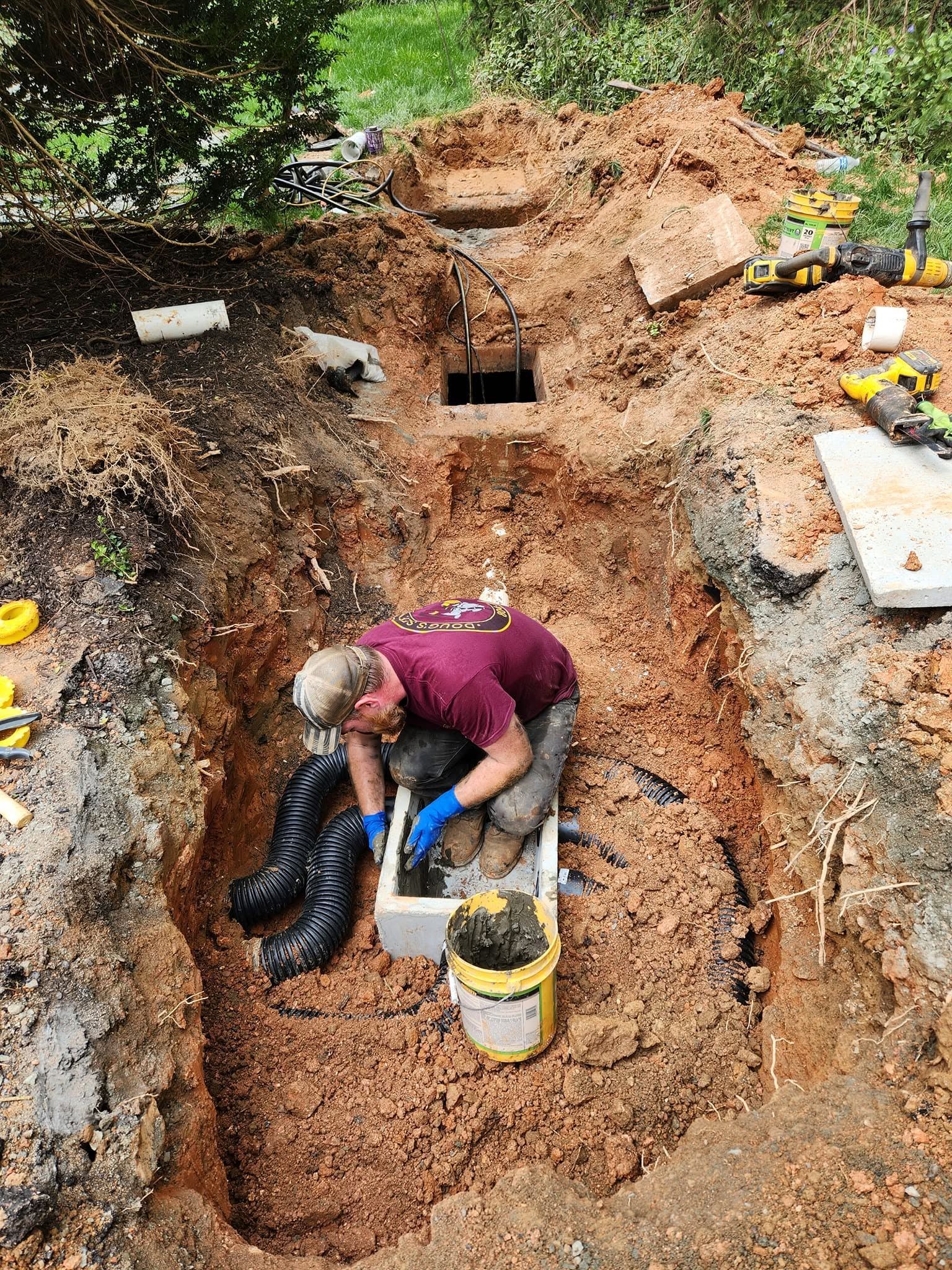
A repair assessment involves inspecting the tank structure, evaluating inlet and outlet conditions, checking distribution components, and assessing drain field loading. Some failures—cracked lids, failed baffles, broken distribution boxes—are discrete repairs that restore function without disturbing the broader system. Others, particularly extensive drain field saturation or tank structural failure, require a more comprehensive response. The decision point between repair and replacement depends on what's failing, how long it's been failing, and whether the remaining components can support continued operation.
After a successful repair, backed-up drains clear, odors at the surface dissipate, and yard flooding above the drain field stops recurring during normal household use. These are the observable indicators that the repair addressed the actual failure point rather than a downstream symptom. For a new installation, the completed system produces no surface odors, handles full household flow without backup, and leaves no visible saturation patterns in the yard during normal operation.
Some older systems present a repair-versus-replace decision that's primarily driven by age and cumulative condition rather than any single failure. A system that has required multiple repairs in a short period, or one that is showing widespread component degradation, may cost more to sustain through ongoing repairs than a new installation would over the same period. That evaluation depends on the full system inspection, not just the presenting complaint.
Answers to Frequent Service Questions
Homeowners dealing with septic problems often want to understand whether their situation requires a repair or a full replacement, and what the process looks like in either case.
What are the clearest signs that a septic system needs immediate attention?
Sewage backing up into the home through drains or toilets, standing water over the tank or drain field during dry weather, and a strong sewage odor at ground level near the system all indicate conditions that require prompt evaluation.
Why does ignoring a small septic problem lead to larger repairs?
A clogged distribution line or deteriorating baffle, left unaddressed, allows solids to reach and clog the drain field—converting a low-cost component repair into a drain field replacement that involves excavation and new aggregate installation.
How is a new septic system installation in Richmond permitted?
New installations require a site evaluation by a licensed soil scientist, a percolation test, and permit approval from the local health department before any excavation begins—Doug's Septic Service coordinates this process as part of the installation scope.
When is a full system replacement necessary rather than a targeted repair?
Replacement becomes necessary when tank structural integrity is compromised, when the drain field has permanently lost absorption capacity due to extended overloading, or when the system design no longer meets current Virginia regulations for the property's use.
How does recent flooding in the yard affect a repair assessment?
Frequent yard flooding that isn't related to rainfall typically indicates that the drain field is saturated and no longer absorbing effluent at the system's output rate—this condition affects the repair scope and may require field testing before a final approach is determined.
Whether the issue is a single failed component or a system that's reached the end of its service life, Doug's Septic Service works through a structured assessment before recommending a repair path. Arrange an on-site inspection to review the current condition of your system and identify the appropriate next step.