
Call Us Today
Solids Overflow Before Most Owners Notice
Septic Pumping in Richmond for tanks showing signs of sludge buildup, slow drains, yard pooling, or approaching the three-to-five-year service interval
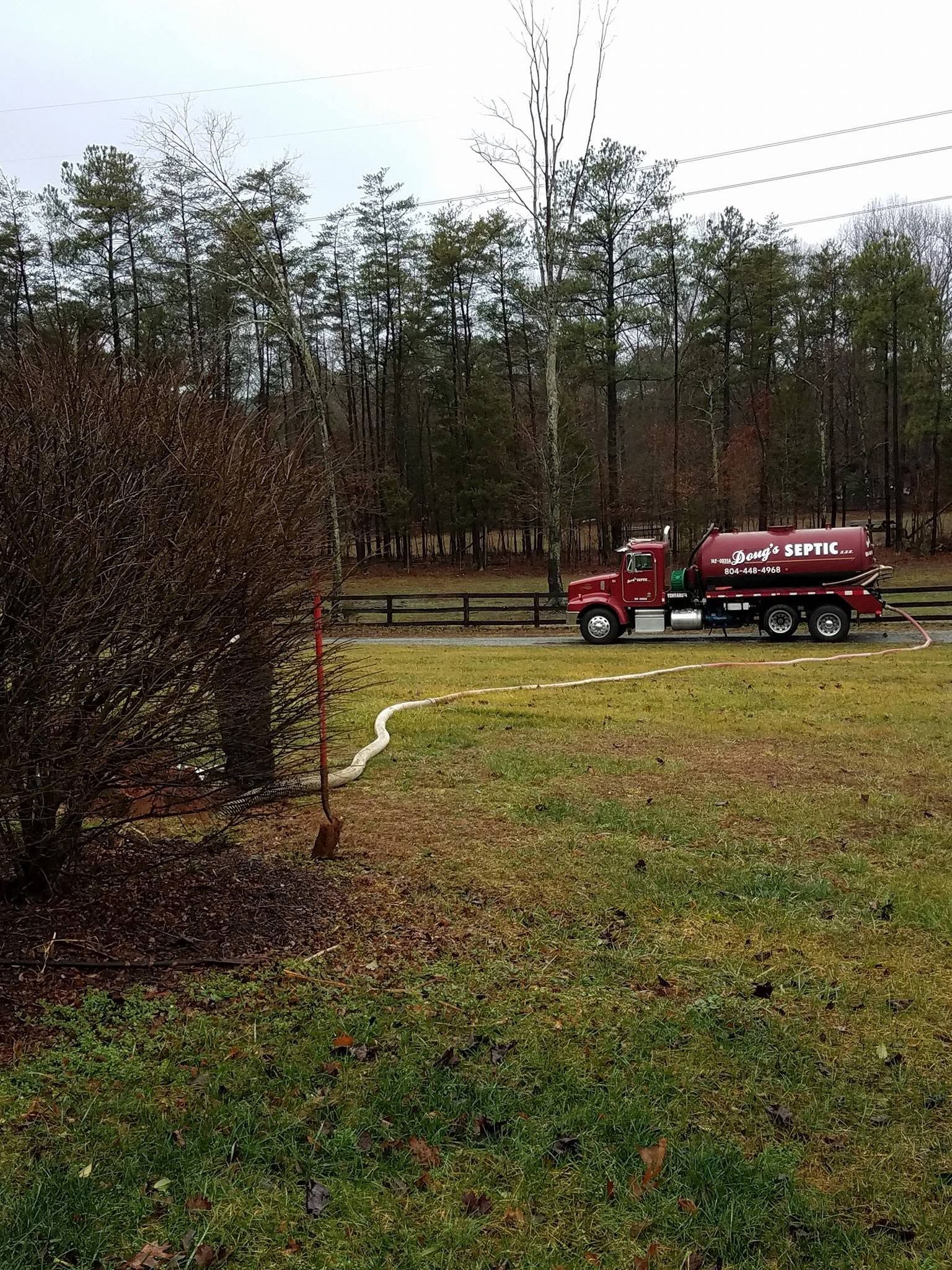
Water pooling in the yard above a drain field, sewage odors drifting across the property, and sewage backing up into a sink or shower are all visible signs that a septic tank has reached a critical sludge level. A tank operating past its pumping interval allows solids to migrate out of the tank and into the drain field—damage that is significantly more expensive to address than routine pumping would have been. Doug's Septic Service provides septic pumping in Richmond for tanks that are overdue, showing warning signs, or approaching the standard three-to-five-year maintenance threshold.
Inside a septic tank, solids settle to the bottom as sludge while lighter materials float to the top as scum. The liquid layer between them flows out to the drain field. When sludge accumulates past a functional level, it reduces the liquid zone and forces partially treated solids out with the effluent—clogging the drain field's absorption capacity. Patches of unusually lush, green grass directly above the drain field are a reliable indicator that this process is already underway, as excess nutrients from leaking effluent cause accelerated grass growth in that zone.
Request a pumping appointment when you notice any of the warning signs above, or to establish a regular maintenance schedule for your property.
What Proper Septic Pumping Requires
Pumping a septic tank correctly involves more than removing liquid—the sludge layer at the bottom must be fully evacuated to reset the tank's operational capacity. This requires breaking up and drawing out settled solids, not just clearing the liquid above them. During the service, the technician also inspects accessible components including inlet and outlet baffles, which direct flow inside the tank and prevent solids from entering the drain field directly. A missing or deteriorated baffle is one of the most common causes of premature drain field failure in residential systems.
After pumping is complete, slow drains throughout the home typically resolve, and yard odors dissipate as the system returns to proper operating levels. The drain field, if not yet permanently damaged, stops receiving excess solids and begins recovering its absorption capacity. The visible signs—pooling water, green patches, drain backup—diminish as the system stabilizes, though drain field recovery may take additional time depending on how long the problem persisted before pumping.
The appropriate pumping interval depends on tank size and household usage, not a fixed calendar date. A two-person household with a large tank may go longer than five years without issue, while a larger family using the same tank size may need service closer to every three years. Knowing your tank's capacity relative to daily flow is the most accurate way to establish a pumping schedule that prevents overflow before it begins.
What Property Owners Usually Ask
Homeowners with septic systems often want to understand what warning signs actually mean and how pumping frequency is determined for their specific situation.
How do I know when my tank actually needs to be pumped?
Observable indicators include slow drains across multiple fixtures, sewage odors at ground level near the tank or drain field, water pooling in the yard above the drain field, and visibly lush grass in a defined strip over the drain field lines.
What causes sludge to build up faster in some households than others?
Garbage disposal use, non-flushable wipes, household size, and the types of cleaning products used all affect how quickly solids accumulate—systems serving households with garbage disposals typically require more frequent pumping.
Why does lush green grass above the drain field indicate a problem?
Effluent leaking through an overloaded drain field delivers elevated nitrogen directly to the root zone, causing the grass in that area to grow noticeably greener and faster than surrounding turf.
How does Richmond's clay soil affect drain field function over time?
Clay-heavy soil absorbs water more slowly than sandy soil, which means drain fields in clay-dominant lots are more vulnerable to saturation when tanks are pumped infrequently—making regular maintenance more critical in this region.
What happens to the waste after the tank is pumped?
Collected waste is transported to a licensed disposal facility for processing in compliance with state environmental regulations, and no waste is disposed of on-site.
Doug's Septic Service can assess your current tank condition during the pumping visit and help you establish a maintenance interval based on your tank size and usage. Set up a service visit to have your tank evaluated and pumped before warning signs become system damage.